.webp)



BLOG
Case Study
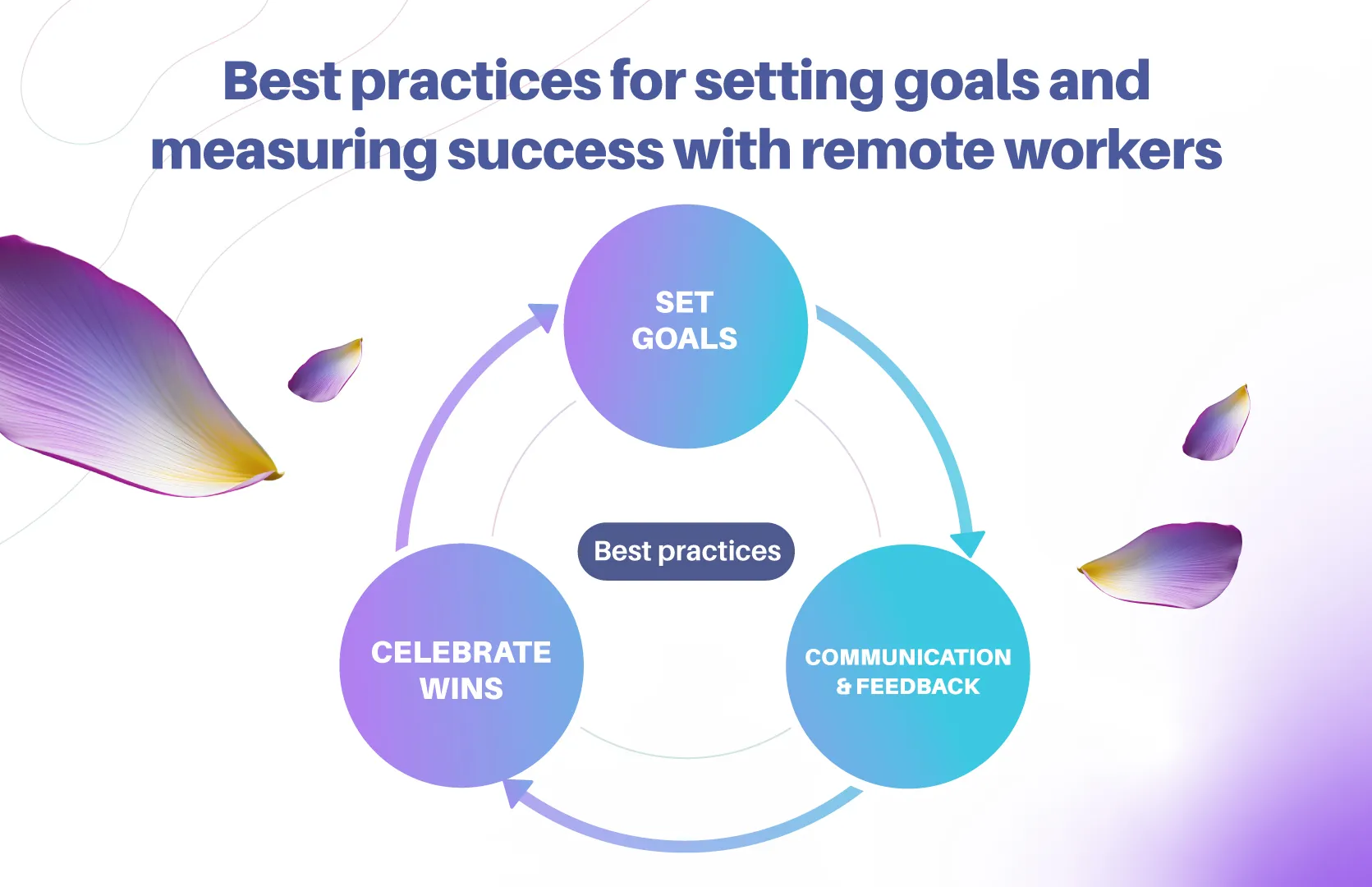
Best practices for setting goals and measuring success with remote workers
October 27, 2023





As most businesses pivot towards remote operations, the approach to setting objectives and gauging success demands a reevaluation. The nuances of remote work bring opportunities and challenges, underscoring the importance of apt strategies for goal-setting and performance assessment.
Setting SMART Goals
The tenets of the SMART (Specific, Measurable, Achievable, Relevant, Time-bound) framework remain as critical as ever, particularly in remote settings. This structured approach ensures that goals are not just aspirational but also achievable and trackable, serving as a roadmap for remote teams to navigate their tasks and projects.
Clear Communication is Key
In a remote working environment, clear and concise communication becomes paramount. Without the organic conversations facilitated by physical workspaces, teams must be intentional about communication. Leveraging tools like Zoom for video meetings or platforms like Slack for text communication ensures that expectations are set and understood, promoting cohesion among dispersed teams. If you want more data on amazing and super useful tools, check out our article on The Ultimate Guide to Essential Tools.
Regular Check-Ins
Periodic check-ins are invaluable in a remote context. They serve as touchpoints for alignment, feedback, and course correction. Beyond managerial oversight, these check-ins foster team connectivity, ensuring everyone remains on the same page, irrespective of their geographical location.
Feedback Flow
Feedback becomes the cornerstone of growth in remote settings. With the absence of physical interactions, it's vital to establish systems for constructive feedback. This feedback loop ensures continuous improvement, fostering a culture where insights are shared openly and with the intent of mutual growth. If you want to know the benefits of constant feedback, read this article and learn all about it.
Tools of the Trade
Effective remote work is bolstered by the right digital tools. Platforms such as Trello or Asana for task management, and metrics tools like Google Analytics, play pivotal roles. However, teams must discern which tools align with their specific needs, weighing their benefits against potential drawbacks.
Flexibility and Adaptation
The dynamic nature of remote work often requires flexibility. As circumstances evolve, goals might need adjustments. Organizations need to remain adaptable, revisiting and recalibrating objectives as needed, ensuring they remain relevant and realistic.
Celebrate the Wins
Recognizing achievements, both big and small, is crucial for morale and motivation. Virtual celebrations or acknowledging successes in team meetings can instill a sense of belonging and appreciation, driving teams to continually strive for excellence.
In conclusion, as the paradigm of work shifts, so must our strategies for goal-setting and success measurement. By fostering clear communication, setting structured goals, and maintaining flexibility, organizations can navigate the complexities of remote work, ensuring teams remain aligned, motivated, and primed for success. We invite readers to share their experiences and insights on this evolving topic, enriching the discourse on remote work best practices.

Content Creator & Media Producer. The official voice of Athyna.